Elevate Your Space: Infusing Spiritual Serenity with Mandala Designs
In our fast-paced modern world, creating a sanctuary within our homes has become more important than ever. The spaces we inhabit directly influence our mental state, emotional well-being, and spiritual connection. One of the most transformative ways to elevate your living environment is through the incorporation of mandala designs. These ancient, sacred geometric patterns have captivated cultures across the globe for thousands of years, and their resurgence in contemporary interior design reflects a deep human need for balance, harmony, and spiritual grounding. This comprehensive guide will explore how you can harness the power of mandala designs to infuse your space with spiritual serenity while creating an aesthetically stunning environment that nurtures your soul.
Understanding Mandala: The Sacred Geometry of Spirituality
Before we delve into the practical applications of mandala designs in your home, it's essential to understand what mandalas truly represent and why they hold such profound significance across multiple spiritual traditions.
The Origins and Meaning of Mandala
The word mandala comes from Sanskrit, meaning "circle" or "completion." However, the significance of mandalas extends far beyond their geometric simplicity. Mandalas are intricate, symmetrical patterns that typically radiate outward from a central point, creating a sense of wholeness and unity. These sacred designs have been used for thousands of years in Hindu, Buddhist, and other spiritual traditions as tools for meditation, prayer, and spiritual awakening.
In Hindu philosophy, mandalas represent the universe itself, with the center symbolizing the divine source and the outer layers representing the material world. Buddhist mandalas, particularly those created in Tibetan traditions, serve as visual representations of enlightenment and the path to spiritual liberation. The creation and contemplation of mandalas is considered a spiritual practice in itself, with each element carrying profound symbolic meaning.
The mathematical precision found in mandala designs is not coincidental. These patterns often reflect the golden ratio and other sacred proportions found throughout nature, from the spiral of a nautilus shell to the arrangement of petals on a flower. This connection to natural harmony makes mandalas particularly powerful tools for creating spaces that feel inherently balanced and peaceful.
The Psychological Impact of Mandala Patterns
Beyond their spiritual significance, mandalas have a measurable impact on our psychological well-being. The symmetrical nature of mandala designs naturally draws the eye toward the center, creating a focal point that can calm an overactive mind. When we gaze upon a mandala, our brain naturally follows the patterns inward, which can induce a meditative state similar to what we experience during formal meditation practices.
Research in environmental psychology has shown that symmetrical patterns and circular designs reduce stress and anxiety. The repetitive nature of mandala patterns engages the brain in a way that quiets racing thoughts and promotes a sense of order and control. This is particularly valuable in our modern world, where we're constantly bombarded with chaotic stimuli and information overload.
The colors used in mandalas also play a crucial role in their psychological impact. Different colors carry different vibrations and meanings. Blues and purples promote calmness and spiritual connection, greens encourage healing and growth, reds stimulate energy and passion, and golds represent enlightenment and divine connection. By choosing mandalas with colors that align with your intentions, you can amplify the positive effects on your mental and emotional state.
The Spiritual Benefits of Mandala Integration
Incorporating mandalas into your living space offers numerous spiritual benefits that extend far beyond aesthetic appeal.
Creating a Sacred Space for Meditation and Reflection
One of the primary spiritual benefits of mandala designs is their ability to facilitate deeper meditation and contemplative practices. When you create a dedicated space adorned with mandalas, you're establishing a sanctuary specifically designed to support your spiritual practice. The visual presence of mandalas serves as a constant reminder of your spiritual intentions and commitments.
Many practitioners find that meditating in front of a mandala deepens their practice significantly. The mandala becomes a focal point that helps anchor the mind, preventing it from wandering. This is particularly beneficial for beginners who struggle with maintaining focus during meditation. As your eyes rest on the mandala's center and follow its patterns, your consciousness naturally aligns with the mandala's inherent harmony and balance.
Enhancing Energy Flow and Chakra Alignment
In many spiritual traditions, mandalas are designed to correspond with the body's energy centers, or chakras. Each chakra is associated with specific colors, elements, and spiritual qualities. By incorporating mandalas that align with particular chakras, you can support the healing and balancing of your energy body.
For example, a red mandala can stimulate and balance your root chakra, promoting feelings of safety and grounding. An orange mandala supports the sacral chakra, enhancing creativity and emotional flow. A yellow mandala activates the solar plexus chakra, boosting confidence and personal power. A green mandala opens the heart chakra, promoting love and compassion. A blue mandala aligns with the throat chakra, supporting authentic communication. An indigo mandala activates the third eye chakra, enhancing intuition and spiritual insight. And a violet or white mandala connects with the crown chakra, facilitating spiritual connection and enlightenment.
By strategically placing mandalas throughout your home that correspond to different chakras, you create an energetic environment that supports holistic healing and spiritual development.
Promoting Mindfulness and Present-Moment Awareness
The contemplation of mandalas naturally cultivates mindfulness. When you pause to truly observe a mandala, noticing its intricate details, colors, and patterns, you're practicing present-moment awareness. This simple act of conscious observation can become a daily spiritual practice that anchors you in the here and now.
In our distracted world, where our attention is constantly pulled in multiple directions, the practice of mandala gazing offers a powerful antidote. By spending even five minutes each day observing a mandala with full attention, you train your mind to be more present and aware. This heightened awareness naturally extends to other areas of your life, helping you experience greater peace, clarity, and spiritual connection throughout your day.
Choosing the Right Mandalas for Your Space
Selecting mandalas for your home is both an art and a spiritual practice. The mandalas you choose should resonate with your personal energy and align with your spiritual intentions.
Understanding Mandala Styles and Traditions
Different mandala styles carry different energies and serve different purposes. Tibetan mandalas, often created with vibrant colors and intricate detail, are designed to represent the path to enlightenment and are traditionally created as temporary sand paintings. Hindu mandalas often feature geometric precision and are used as tools for meditation and spiritual practice. Islamic geometric mandalas reflect the mathematical harmony found in Islamic art and architecture. Contemporary mandalas blend traditional symbolism with modern aesthetics, making them accessible and appealing to contemporary sensibilities.
When choosing mandalas for your space, consider which tradition resonates most deeply with you. Your intuitive response to a particular mandala is often a reliable indicator that it carries the energy you need in your life at this moment.
Selecting Mandalas Based on Color and Intention
Once you've identified the style of mandala that appeals to you, consider the colors and your intentions. Are you seeking to cultivate more peace and calm? Choose mandalas in cool tones like blues, purples, and greens. Are you looking to boost your energy and motivation? Select mandalas featuring warm tones like reds, oranges, and yellows. Do you want to enhance your spiritual connection and intuition? Opt for mandalas in indigo and violet hues.
You might also consider creating a collection of mandalas that represent different aspects of your spiritual journey. One mandala might support your meditation practice, another might align with your healing intentions, and yet another might represent your aspirations for personal growth and transformation.
The Importance of Authenticity and Quality
When selecting mandalas for your space, prioritize authenticity and quality. Mandalas created by artists who understand their spiritual significance carry more powerful energy than mass-produced designs. Look for mandalas created by artists who have studied traditional mandala creation or who approach their work with spiritual intention.
The quality of materials also matters. A beautifully printed mandala on high-quality paper or canvas will have a more refined presence in your space than a cheap reproduction. The craftsmanship and care invested in creating the mandala directly influences the energy it radiates.
Incorporating Mandalas into Different Rooms
Different rooms in your home serve different purposes and can benefit from different mandala placements and styles.
The Bedroom: Creating a Sanctuary for Rest and Renewal
Your bedroom is your personal sanctuary, a space dedicated to rest, renewal, and intimate connection. Mandalas in the bedroom should promote relaxation, peaceful sleep, and spiritual restoration. Consider placing a large mandala artwork above your bed as a focal point that supports restful sleep and peaceful dreams. Choose mandalas in soft, calming colors like lavender, pale blue, or soft green.
You might also incorporate mandala designs into your bedding, pillows, or wall hangings. A mandala tapestry can serve as both a beautiful decorative element and a spiritual anchor for your sleep space. Some people find that gazing at a mandala before sleep helps quiet their mind and facilitates deeper, more restorative sleep.
The Living Room: Fostering Connection and Harmony
The living room is where family and guests gather, making it an ideal space for mandalas that promote harmony, connection, and positive energy. A large mandala artwork on a prominent wall can serve as a conversation piece while subtly influencing the energy of the entire room. Choose mandalas that feel welcoming and balanced, perhaps featuring a harmonious blend of colors that create a sense of unity.
You might also incorporate mandala designs through throw pillows, wall hangings, or decorative objects. These elements add visual interest while infusing the space with spiritual energy. The presence of mandalas in your living room creates an environment where people naturally feel more relaxed, connected, and at peace.
The Home Office or Study: Enhancing Focus and Clarity
If you work from home or have a dedicated study space, mandalas can significantly enhance your productivity and mental clarity. Choose mandalas in colors that promote focus and mental acuity, such as yellow, gold, or clear blues. Place a mandala where you can see it during work, perhaps on your desk or on the wall in front of you.
The presence of a mandala in your workspace serves as a visual anchor that helps maintain focus and prevents mental wandering. Many people find that taking brief mandala-gazing breaks during work sessions helps refresh their mind and restore mental clarity. The mandala becomes a tool for both spiritual practice and practical productivity.
The Bathroom: Supporting Cleansing and Renewal
The bathroom is a space of cleansing and renewal, making it an ideal location for mandalas that support purification and fresh starts. A mandala in the bathroom can transform this utilitarian space into a spa-like sanctuary. Consider placing a mandala artwork on the wall where you can see it while bathing or preparing for your day.
Choose mandalas in colors associated with cleansing and renewal, such as clear blues, whites, or greens. The combination of water and mandala energy creates a powerful space for releasing what no longer serves you and inviting fresh energy into your life.
The Kitchen: Infusing Nourishment with Intention
The kitchen is the heart of the home, a space where nourishment is prepared and shared. Mandalas in the kitchen can infuse this space with positive intention and gratitude. A mandala artwork on the kitchen wall or a mandala-designed placemat can serve as a reminder to approach food preparation and eating with mindfulness and appreciation.
Choose mandalas in warm, nourishing colors like oranges, golds, and reds. These colors stimulate appetite and create a warm, welcoming atmosphere. The presence of mandalas in the kitchen encourages a more conscious, intentional approach to nourishment and family connection.
Mandala Design Elements and Their Meanings
Understanding the symbolic elements within mandala designs can deepen your appreciation and help you select mandalas that align with your specific intentions.
The Center Point: The Divine Source
The center point of a mandala, often called the bindu, represents the divine source, the origin of all creation. This central point is the spiritual heart of the mandala and serves as the focal point for meditation and contemplation. When you gaze at a mandala, allowing your attention to rest on the center point, you're symbolically connecting with the divine source within yourself.
Circles and Rings: Cycles and Wholeness
The circular patterns that radiate outward from the center represent cycles, wholeness, and the eternal nature of existence. Each ring or circle can represent different layers of consciousness or different aspects of spiritual development. The progression from the center outward represents the journey from the divine source into manifestation in the material world.
Geometric Shapes: Order and Balance
The geometric shapes within mandalas, such as triangles, squares, and hexagons, represent different aspects of creation and spiritual principles. Triangles often represent the trinity or the balance of masculine and feminine energies. Squares represent stability and the four directions. Hexagons represent harmony and balance. The precise arrangement of these shapes creates a sense of order and mathematical harmony that naturally calms the mind.
Petals and Flowers: Growth and Blossoming
Many mandalas incorporate flower or petal designs, which represent growth, blossoming, and the unfolding of spiritual potential. The lotus flower is particularly significant in Buddhist and Hindu traditions, representing the journey from darkness to enlightenment. The presence of floral elements in mandalas reminds us of our capacity for growth and transformation.
Symmetry: Balance and Harmony
The perfect symmetry found in mandalas represents the balance and harmony inherent in the universe. This symmetry is deeply calming to the human mind, as it reflects the order and balance we unconsciously seek. The symmetrical nature of mandalas creates a sense of completeness and wholeness that naturally promotes peace and well-being.
Practical Ways to Display Mandalas in Your Home
Once you've selected the mandalas that resonate with you, the next step is to display them in ways that maximize their visual and spiritual impact.
Wall Art and Framing
One of the most popular ways to display mandalas is as wall art. A beautifully framed mandala becomes a focal point in any room and serves as a constant visual reminder of your spiritual intentions. When selecting frames, choose materials and styles that complement both the mandala and your overall décor. Natural wood frames often work well with traditional mandalas, while sleek metal frames can complement more contemporary designs.
Consider the size of your mandala artwork in relation to your wall space. A large mandala can serve as a dramatic focal point above a sofa or bed, while smaller mandalas can be grouped together to create a gallery wall effect. The placement of your mandala artwork should be at eye level or slightly above, making it easy and natural to gaze upon.
Tapestries and Textiles
Mandala tapestries offer a versatile way to incorporate mandala designs into your space. These can be hung on walls, draped over furniture, or even used as room dividers. Tapestries add texture and warmth to a space while infusing it with mandala energy. They're particularly effective in bedrooms and meditation spaces, where their soft, flowing quality creates a sense of comfort and sanctuary.
Mandala-designed textiles, such as throw pillows, blankets, and rugs, bring mandala energy into your space in subtle, integrated ways. These pieces can be easily changed or rotated, allowing you to refresh your space's energy as your intentions and needs evolve.
Meditation Cushions and Yoga Mats
For those with dedicated meditation or yoga spaces, mandala-designed meditation cushions and yoga mats serve both practical and spiritual purposes. These items ground your practice in mandala energy while providing comfort and support. The presence of mandala designs on these items serves as a constant reminder of your spiritual commitment and intentions.
Decorative Objects and Sculptures
Mandala designs can be incorporated through decorative objects such as mandalas painted on wooden discs, mandala-designed plates, or mandala sculptures. These three-dimensional representations of mandalas add depth and visual interest to shelves, tables, and display areas. They serve as conversation pieces while infusing your space with spiritual energy.
Window Treatments
Mandala designs can be incorporated into window treatments through mandala-patterned curtains or mandala window decals. These elements allow light to interact with the mandala patterns, creating dynamic visual effects throughout the day. The interplay of light and mandala design creates a constantly evolving spiritual presence in your space.
Creating a Dedicated Meditation Space
For those serious about deepening their spiritual practice, creating a dedicated meditation space centered around mandala designs can be transformative.
Designing Your Sacred Space
Begin by selecting a quiet corner or room in your home where you can establish your meditation space. This area should be free from distractions and ideally positioned away from high-traffic areas. The space doesn't need to be large; even a small corner can become a powerful sanctuary with the right elements.
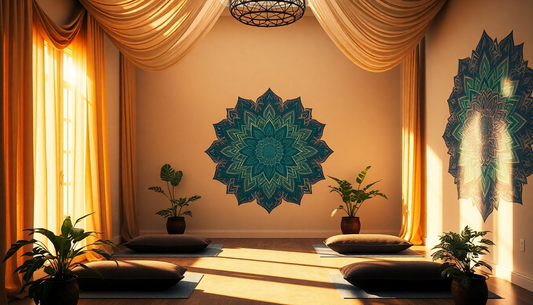
Place a large mandala artwork at eye level where you'll naturally gaze during meditation. This becomes your focal point, the visual anchor for your practice. Surround this central mandala with complementary elements that support your meditation practice.
Essential Elements for Your Meditation Space
Beyond the mandala artwork, consider incorporating other elements that support your practice. A comfortable meditation cushion or chair allows you to sit for extended periods without physical discomfort. Soft lighting, perhaps from candles or a dimmer switch, creates an atmosphere conducive to